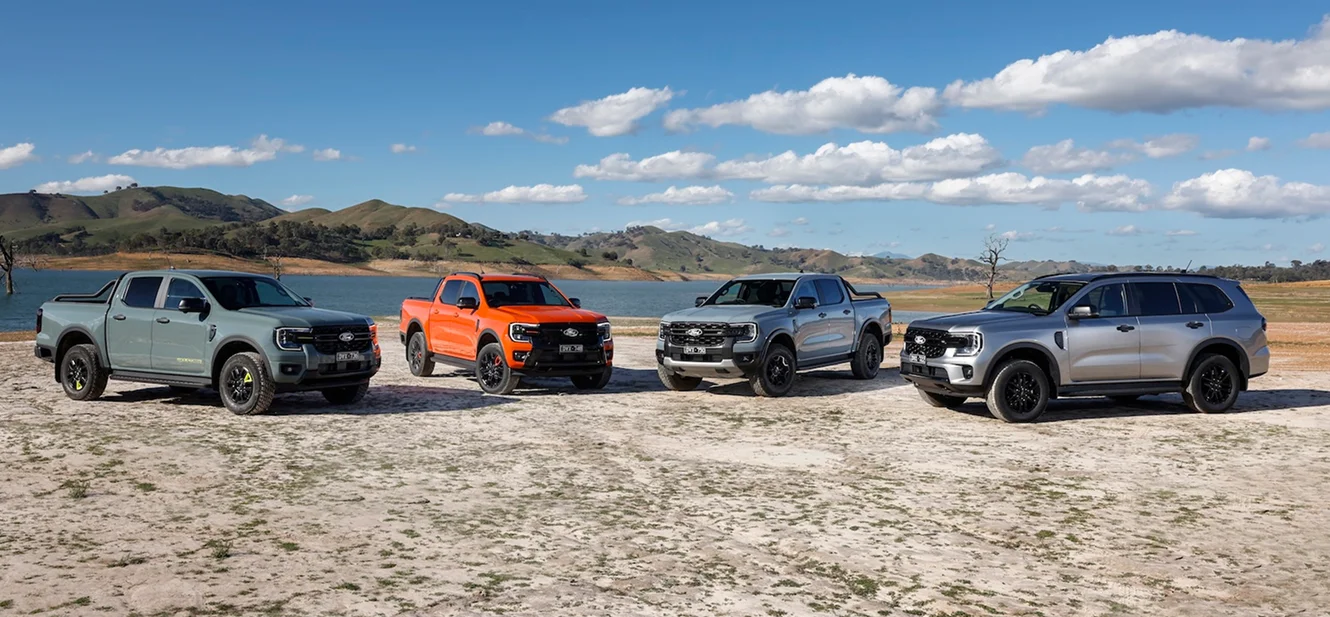
The Ford Ranger PHEV has landed in Australia, and it’s arguably the most anticipated new ute of the year. As the first plug-in hybrid version of the country’s best-selling vehicle, it’s already being talked about as a genuine contender for best hybrid ute 2025 has to offer — but is it actually the right fit for families living on the Mornington Peninsula.
In this Ranger plug-in hybrid review, we’re skipping the marketing spin and focusing on what matters to local buyers: how far it’ll get you on electric power for the school run, whether it can still tow a boat to Sorrento, what charging at home actually looks like, and whether the numbers stack up against a standard diesel Ranger. If you’ve been searching for an honest, real-world look at the Ford Ranger PHEV Australia buyers can expect day to day, this is it.
What’s Actually Under the Bonnet
The Ranger PHEV pairs a 2.3-litre turbocharged petrol engine with a 75kW electric motor and an 11.8kWh battery. Combined, the system produces 207kW and 697Nm — more torque than even the Ranger’s 3.0-litre V6 diesel. That’s a genuinely strong number for a family ute that also needs to do the heavy lifting on weekends.
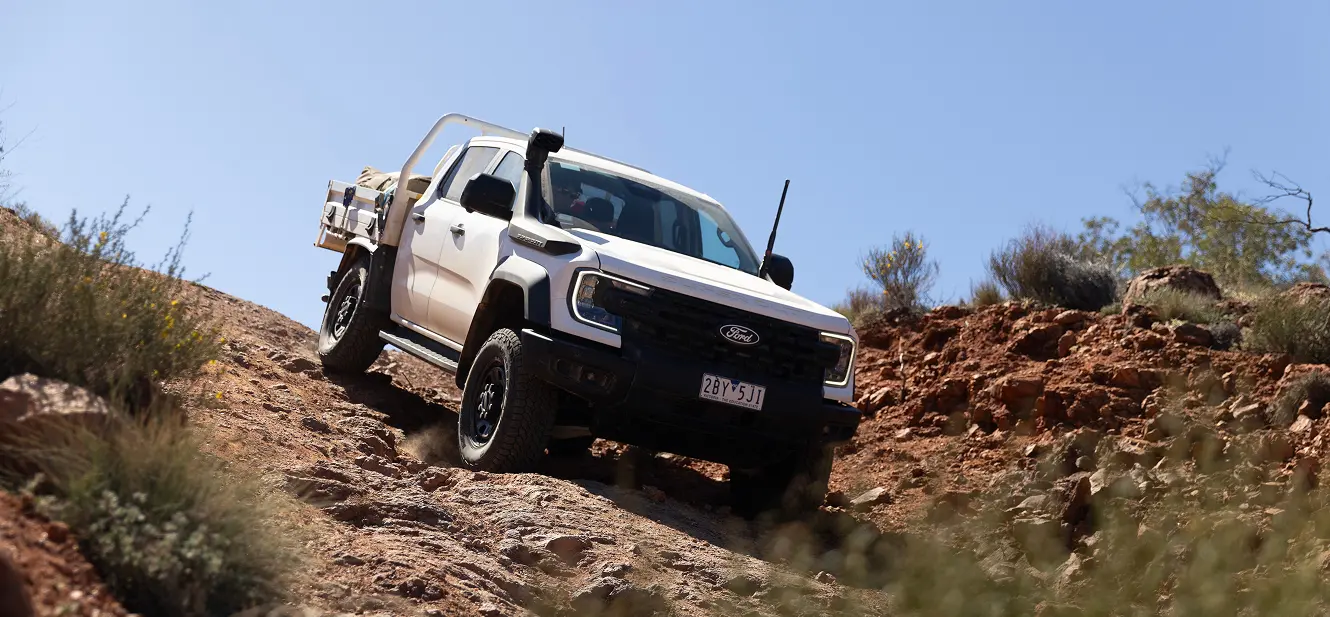
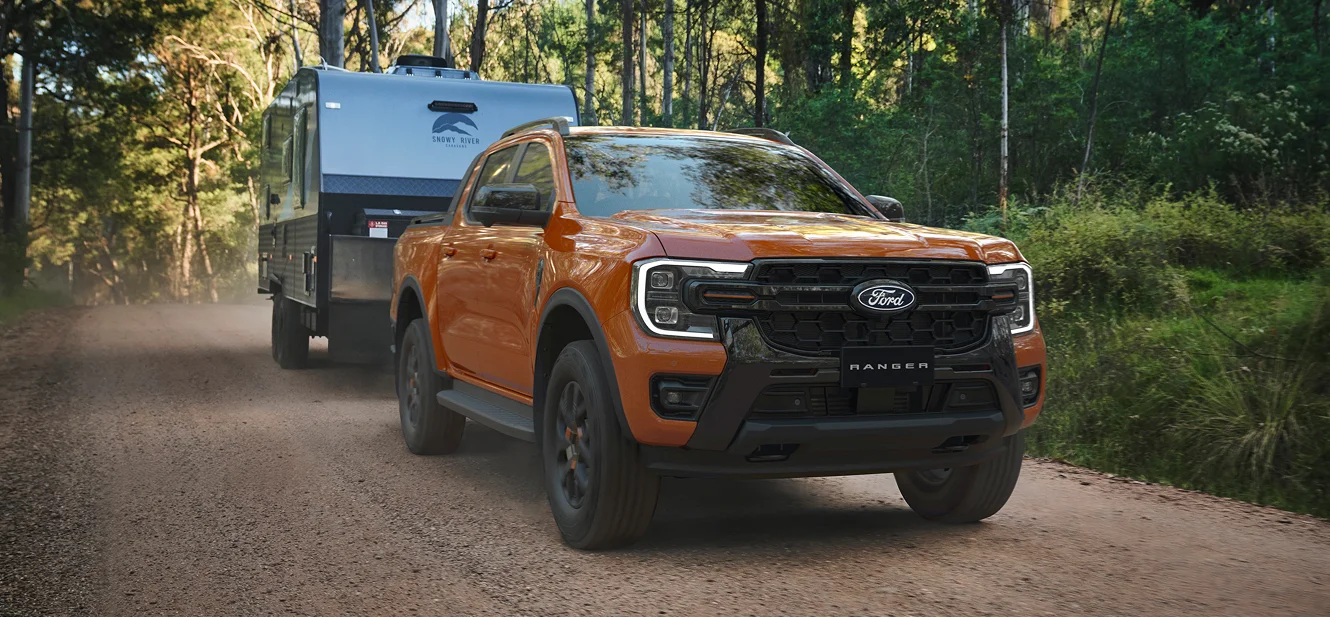
Importantly, none of that grunt comes at the cost of capability. The Ranger PHEV keeps the same 3,500kg braked towing capacity as the diesel Ranger, along with the proper low-range 4WD system, locking rear differential, and off-road drive modes. If your weekend plans involve launching a boat at Sorrento or towing a trailer to the tip, the PHEV doesn’t ask you to compromise.
Electric Range: Enough for the School Run, Not the Whole Day
This is where you need to set realistic expectations. The Ranger PHEV offers around 49km of electric-only driving range. For most Peninsula families, that’s enough to cover the school drop-off, a trip to the shops, or a short commute into Frankston entirely on electric power — using zero fuel in the process.
It won’t get you to the city and back on battery alone, but that’s not really the point. Think of the EV range as covering your daily errands silently and cheaply, while the petrol engine sits in reserve for the longer hauls — like a weekend trip down to Portsea or out to the wineries in Flinders.
Ford has built in four selectable EV modes to help you manage this:
- Auto EV – lets the car decide the most efficient mix of electric and petrol power
- EV Now – runs in pure electric mode to save fuel on short trips
- EV Later – preserves your battery charge for later use (handy if you know you’ll want EV power for the school pickup later in the day)
- EV Charge – uses the engine to top up the battery while driving, so you arrive with charge in reserve
Charging at Home vs. On the Road
One of the more practical advantages of the Ranger PHEV is that it doesn’t require fast-charging infrastructure to be useful. The 11.8kWh battery can be fully charged overnight using a standard household powerpoint, or in around four hours using a 15A outlet (commonly used for things like ovens or workshop equipment).
There’s no DC fast-charging capability, so this isn’t a vehicle you’ll be topping up at a public fast charger on a road trip. For Peninsula families, though, that’s rarely an issue — most charging will happen at home overnight, ready for the next day’s errands. If you’ve got off-street parking and a powerpoint nearby, you’re set up for the bulk of the PHEV’s everyday benefit without spending a cent on extra charging hardware.
There’s also a neat bonus for the weekends: the Ranger PHEV comes standard with Pro Power Onboard, a 6.9kW power supply system with outlets in the cabin and tray. That means you can run camping gear, a fridge, or power tools directly from the ute’s battery — handy whether you’re at a worksite or set up at a campground for the weekend.
Government Rebates: What’s Changed for PHEVs
If you’ve previously looked into a hybrid or EV for novated leasing or business use, it’s worth knowing the rules have shifted. From 1 April 2025, plug-in hybrids — including the Ranger PHEV — are no longer eligible for the federal Fringe Benefits Tax (FBT) exemption that applies to full battery electric vehicles. Only fully electric and hydrogen fuel cell vehicles currently qualify for that exemption.
What this means in practice: if you’re considering the Ranger PHEV through a novated lease or as a business vehicle, it will be treated the same as a standard diesel Ranger for FBT purposes. This doesn’t change the vehicle’s day-to-day running cost benefits — the fuel savings from electric driving are still real — but it does mean the PHEV’s case rests on those running costs and capability, rather than a tax concession.
For private buyers simply purchasing the vehicle outright or financing it, this change doesn’t apply directly, but it’s a useful thing to flag if your accountant or finance broker raises it.
Total Cost of Ownership: PHEV vs. Standard Ranger
The Ranger PHEV range starts at $71,990 before on-road costs for the XLT, climbing to $75,990 for Sport, $79,990 for Wildtrak and $86,990 for the flagship Stormtrak. That’s a premium of roughly $2,000–$7,000 over the equivalent diesel Ranger variants.
So where does that extra spend get clawed back? A few places:
- Fuel savings: Ford quotes combined fuel economy of around 2.7–2.9L/100km for the Ranger PHEV — dramatically lower than a diesel Ranger’s typical 8–9L/100km, provided you’re regularly charging at home and using the electric range for short trips.
- Reduced running costs for daily driving: With most school runs and local errands able to be completed on electric power, many Peninsula families could go weeks between fill-ups for everyday use.
- Warranty coverage: The Ranger PHEV is backed by Ford’s five-year, unlimited-kilometre warranty, plus an eight-year, 160,000km warranty specifically on the battery — useful peace of mind for a vehicle still relatively new to the market.
The honest take: if your driving is mostly short trips around Frankston, Mt Eliza or Mornington with occasional longer hauls, the fuel savings can add up meaningfully over a few years of ownership. If you’re regularly driving long distances without the chance to charge overnight, a diesel Ranger may still make more financial sense — and is worth comparing directly against the PHEV before you decide.
Who Is the Ranger PHEV Actually Suited To?
Based on the real-world strengths of the vehicle, the Ranger PHEV makes the most sense for Peninsula families who:
- Have off-street parking and access to a standard or 15A powerpoint for overnight charging
- Do the bulk of their weekly driving in short, local trips (school runs, shopping, commuting within the Peninsula)
- Still need genuine towing and off-road capability for boats, trailers, or weekend adventures
- Want lower running costs without stepping all the way into a full electric vehicle and its charging considerations
If that sounds like your household, the Ranger PHEV offers a genuinely useful middle ground — full Ranger capability, with the option to drive most of your week on electric power.
We’ve also put together a broader look at who the Ranger PHEV suits across Melbourne tradies and families if you want a wider comparison beyond the Peninsula-specific use case.
See It and Drive It at Frankston Ford
Specs and reviews only tell you so much — the best way to know if the Ranger PHEV suits your family’s driving is to get behind the wheel. We currently have new and demo Ranger PHEV stock available to view at our Frankston showroom.
You can book a test drive online in a couple of minutes, or get in touch with our team directly via our contact page if you’d like to talk through financing options, trade-in values, or how the PHEV compares to a diesel Ranger for your specific driving needs.
Pricing may vary. Contact Frankston Ford for the most current pricing.